The best Year 3 reading list is a wide mix: funny stories, magic, adventure, classics, comics, non-fiction and poetry. Here are 45 books for 7- and 8-year-olds, in seven categories, each with a short note on why it helps build vocabulary. We checked every title and author on BookTrust’s Bookfinder, and most come from BookTrust’s Great Books Guide 2026–27.
Year 3 is far too early for formal 11+ work, but reading widely now is one of the gentlest ways to grow the vocabulary that 11+ English and verbal reasoning tests rely on later. In Years 3 and 4, the national curriculum asks pupils to listen to and discuss a wide range of fiction, poetry, plays, non-fiction and reference books.
Let your child choose what they enjoy from the list, and read one of the harder books aloud together. Pick up three new words per chapter and talk about them: that small habit does more than any test paper in Year 3.
Sources: BookTrust Bookfinder; National curriculum in England: English programmes of study (checked 14 October 2026).
How we chose this Year 3 reading list
Every book has a BookTrust interest age that includes 7 or 8, except two stretch titles. Books marked “stretch” have a higher interest or reading age and are better shared aloud. We mixed new books from BookTrust’s Great Books Guide 2026–27 with well-loved classics, then grouped them by type and wrote our own vocabulary notes.
Easier
- Shorter chapters or more pictures
- Good for building confidence and reading alone
Stretch
- A higher BookTrust reading or interest age
- Best read aloud together, talking about new words as you go
Unmarked books sit in the middle. Every child is different, so treat the labels as a rough guide, and swap a book for another in the same category if it doesn’t grab your child.
Funny stories for Year 3
Funny books keep reluctant readers turning pages, and jokes often depend on knowing exactly what a word means.
| Title | Author | Why it’s good for vocabulary |
|---|---|---|
| Horrid Henry (easier) | Francesca Simon, illustrated by Tony Ross | Four short stories, so a good confidence-builder; collect the words used to describe Henry and Perfect Peter |
| Flat Stanley | Jeff Brown, illustrated by Scott Nash | A silly idea told in plain, clear sentences; talk about words like notice-board, burglary and gallery |
| Claude in the City | Alex T Smith | Playful character names such as Mr Bobblysock invite talk about how words are made |
| Kid Potato | Neil Coslett | Five short, absurd stories, ideal for one-story-a-night word hunts |
| Riley Wright is Always Wrong | Mel Taylor-Bessent, illustrated by SR. Sanchez | A school story about a girl starting Year 4; good for words about feelings and embarrassment |
| Robots Stole My Mum! | Alex Kirk, illustrated by Tim Wesson | A fast, funny action story; spot the words the author uses to build excitement |
| Postman Planet | Ben Davis, illustrated by Yasmin Sheikh | Space-adventure comedy; ask what a stickler for the rules is |
| Hari Kumar: Ultimate Superstar | Rashmi Sirdeshpande, illustrated by Mamta Singh | Told in a diary style; good for words about ambition, friendship and feelings |
Magic and fantasy for Year 3
Made-up worlds need lots of describing words, and children often borrow them for their own stories.
| Title | Author | Why it’s good for vocabulary |
|---|---|---|
| The Worst Witch | Jill Murphy | A classic school story; collect the words that describe the accident-prone Mildred and strict Miss Hardbroom |
| Isadora Moon Goes to School | Harriet Muncaster | Compares fairy school and vampire school, which is good for words about opposites |
| Wands Away!: Learning to Fly | Emma Farrarons | A first-day-at-school story with words for worries and courage |
| Animagicals: Mia’s Tiger | Paula Harrison, illustrated by Erwin Madrid | Habitats from rainforests to grasslands give lots of nature words |
| The Elementals: Wanzu Sets Sail | Love Ssega, illustrated by Erika Meza | Built around the elements air, fire, water and earth; a good way into weather and storm words |
| Star Kitties: Detective Kitty is on the Case! | Laura Ellen Anderson | A magical mystery; spot the clue and detective words |
| The Firework Maker’s Daughter | Philip Pullman | A fantasy adventure about a determined girl, her friend and an elephant; good for words about fire and courage |
Adventure and mystery for Year 3
Adventure stories move quickly, so new words are easier to work out from what is happening.
| Title | Author | Why it’s good for vocabulary |
|---|---|---|
| Oliver and the Seawigs | Philip Reeve, illustrated by Sarah McIntyre | Explorers, a grumpy albatross and a short-sighted mermaid; full of sea and travel words |
| Pugs of the Frozen North | Philip Reeve, illustrated by Sarah McIntyre | A sledge race across the Arctic; great for cold-weather and journey words |
| Captain Sunshine | Alex Milway | A ship, a crew and a rival who wants to sabotage the voyage; talk about sailing words |
| Koalas in Capes: The Zombie Chickens | Terrie Chilvers, illustrated by David O’Connell | Superheroes, a supervillain and a museum heist; words such as heist and undercover are worth discussing |
| Will Shakespeare Mysteries: The Stinky Stolen Toenails | Kaz Penney, illustrated by Sammy Elgie | A comic crime story set in Elizabethan Stratford-upon-Avon; a first taste of historical words |
| The Accidental Vikings | Karen McCombie, illustrated by Anneli Bray | Time travel to a Viking village, with words about Viking life such as weaving |
| The Abominables (stretch) | Eva Ibbotson | A Himalayan adventure with a richer, older style; read it together |
Classics to share for Year 3
Older books often use words children rarely hear in conversation, which makes them ideal for reading aloud together.
| Title | Author | Why it’s good for vocabulary |
|---|---|---|
| Charlotte’s Web | E B White, illustrated by Garth Williams | A gentle farm story that also touches on big questions; a lovely shared read |
| The Sheep-Pig | Dick King-Smith, illustrated by Mike Terry | Babe learns to round up sheep by asking politely; good for words about manners and farm life |
| Winnie-the-Pooh | A A Milne, illustrated by E H Shepard | Playful made-up words such as Heffalump and expotition are great for talking about wordplay |
| Pippi Longstocking | Astrid Lindgren, illustrated by Lauren Child | Lively escapades with a circus and burglars; plenty of action words |
| The Enchanted Wood | Enid Blyton | Characters such as Moonface and the Saucepan Man show how names can describe |
| The Magic Faraway Tree | Enid Blyton | A new land at the top of the tree in each adventure, so lots of setting words |
| Matilda | Roald Dahl, illustrated by Quentin Blake | A girl who teaches herself to read and works through the library; Dahl’s inventive language is perfect for reading aloud |
| Stig of the Dump | Clive King | A friendship with a cave boy found in an old chalk pit; good for countryside words |
| The Iron Man (stretch) | Ted Hughes, illustrated by Chris Mould | A classic story with powerful description; an older read to share together |
Comics and graphic novels for Year 3
Pictures support the words, so children can tackle longer words with less effort.
| Title | Author | Why it’s good for vocabulary |
|---|---|---|
| Froggy | Paige Walshe | A big journey across the pond, with plenty of words about nature and bravery |
| Chicken Hill: Attack of the Zombie Cactus | Beccy Blake | A weird and wonderful town; ask what an inventor and a conspiracy theorist are |
| The Terrible Trio: The (Not So) Superheroes | Swapna Haddow, illustrated by Minky Stapleton | Rubbish superpowers make a funny way into words about heroes and villains |
| Tiny Hercules | Jon Lock, illustrated by Nich Angell | Greek myth meets everyday life, with words such as banished and quest |
| The Spectacular Space Loop | Javi De Castro | An unusual space comic; good for space and adventure words |
Non-fiction for Year 3
Fact books bring in subject words that stories rarely use, a different kind of vocabulary.
| Title | Author | Why it’s good for vocabulary |
|---|---|---|
| Ant Life (easier) | Moesha Kellaway | Story and facts together, with job words such as nursery, guard, scout and farmer ants |
| The Search for Our Cosmic Neighbours (easier) | Chloe Savage | A space story with science words about exploring other planets |
| The Fact-Finders Ocean | DK | Underwater habitats and creatures; good for science and geography words |
| The Animal Detectives | Moira Butterfield, illustrated by Merle Goll | Animal facts told as detective cases, so children meet both science and mystery words |
| Cities Going Wild | Catherine Barr, illustrated by Christiane Engel | Real examples of nature in cities around the world; useful for environment words |
| Pets Tell Tales: Ancient Egypt | Rik Worth, illustrated by Jordan Collver | History, myths and customs in comic form; a first look at history words |
Poetry for Year 3
Poems are short, so children can notice every word, and rhythm helps new words stick.
| Title | Author | Why it’s good for vocabulary |
|---|---|---|
| Ridiculous Raps and Rhymes | Michael Rosen and MC Grammar, illustrated by Mike Byrne | Raps and rhymes that are fun to perform aloud, which is good for rhyme and rhythm |
| A Poem for Every Question (stretch) | Brian Bilston, illustrated by Joe Berger | 100 funny poems answering curious questions; dip in a poem at a time |
| The Poetry World of John Agard (stretch) | John Agard, illustrated by Shirley Hottier | 80 poems for younger children; read some aloud together |
How to turn reading into 11+ vocabulary
A short word hunt after each chapter turns everyday reading into vocabulary practice. The Years 3 and 4 programme of study expects pupils to use dictionaries to check the meaning of words they have read, so this fits what your child does at school.
- Spot three new words
While reading, your child notes three words per chapter that are new or interesting.
- Guess, then check
Guess the meaning from the sentence, then look it up together in a children’s dictionary.
- Use it in a sentence
Say or write a sentence of their own with the word, ideally about something from their day.
- Find a twin and an opposite
Think of a word with a similar meaning and one with the opposite meaning, if there is one.
- Practise little and often
Keep the words in a notebook and play a quick game with them at the weekend.
Our vocabulary games for 11 plus work well with a word-hunt notebook, and the guide to mastering 11+ vocabulary explains how to build a longer-term routine. For spelling, our page on 11+ spelling words has the statutory Years 3 and 4 list.
When your child is a little older, our 11 plus vocabulary list with meanings and the free 11+ vocabulary quiz show the kind of words that come up in the 11+. In Year 3, treat them as a peek ahead rather than homework.
Printable Year 3 reading checklist
Print this page and let your child tick off each book as they finish it. There’s no need to read them all; the aim is variety.
- Horrid Henry, Francesca Simon
- Flat Stanley, Jeff Brown
- Claude in the City, Alex T Smith
- Kid Potato, Neil Coslett
- Riley Wright is Always Wrong, Mel Taylor-Bessent
- Robots Stole My Mum!, Alex Kirk
- Postman Planet, Ben Davis
- Hari Kumar: Ultimate Superstar, Rashmi Sirdeshpande
- The Worst Witch, Jill Murphy
- Isadora Moon Goes to School, Harriet Muncaster
- Wands Away!: Learning to Fly, Emma Farrarons
- Animagicals: Mia’s Tiger, Paula Harrison
- The Elementals: Wanzu Sets Sail, Love Ssega
- Star Kitties: Detective Kitty is on the Case!, Laura Ellen Anderson
- The Firework Maker’s Daughter, Philip Pullman
- Oliver and the Seawigs, Philip Reeve
- Pugs of the Frozen North, Philip Reeve
- Captain Sunshine, Alex Milway
- Koalas in Capes: The Zombie Chickens, Terrie Chilvers
- Will Shakespeare Mysteries: The Stinky Stolen Toenails, Kaz Penney
- The Accidental Vikings, Karen McCombie
- The Abominables, Eva Ibbotson
- Charlotte’s Web, E B White
- The Sheep-Pig, Dick King-Smith
- Winnie-the-Pooh, A A Milne
- Pippi Longstocking, Astrid Lindgren
- The Enchanted Wood, Enid Blyton
- The Magic Faraway Tree, Enid Blyton
- Matilda, Roald Dahl
- Stig of the Dump, Clive King
- The Iron Man, Ted Hughes
- Froggy, Paige Walshe
- Chicken Hill: Attack of the Zombie Cactus, Beccy Blake
- The Terrible Trio: The (Not So) Superheroes, Swapna Haddow
- Tiny Hercules, Jon Lock
- The Spectacular Space Loop, Javi De Castro
- Ant Life, Moesha Kellaway
- The Search for Our Cosmic Neighbours, Chloe Savage
- The Fact-Finders Ocean, DK
- The Animal Detectives, Moira Butterfield
- Cities Going Wild, Catherine Barr
- Pets Tell Tales: Ancient Egypt, Rik Worth
- Ridiculous Raps and Rhymes, Michael Rosen and MC Grammar
- A Poem for Every Question, Brian Bilston
- The Poetry World of John Agard, John Agard
For the bigger picture, including times tables and spelling, see our Year 3 11 plus preparation guide.
How 11+ Vocab Master and 11+ Verbal Reasoning Master can help
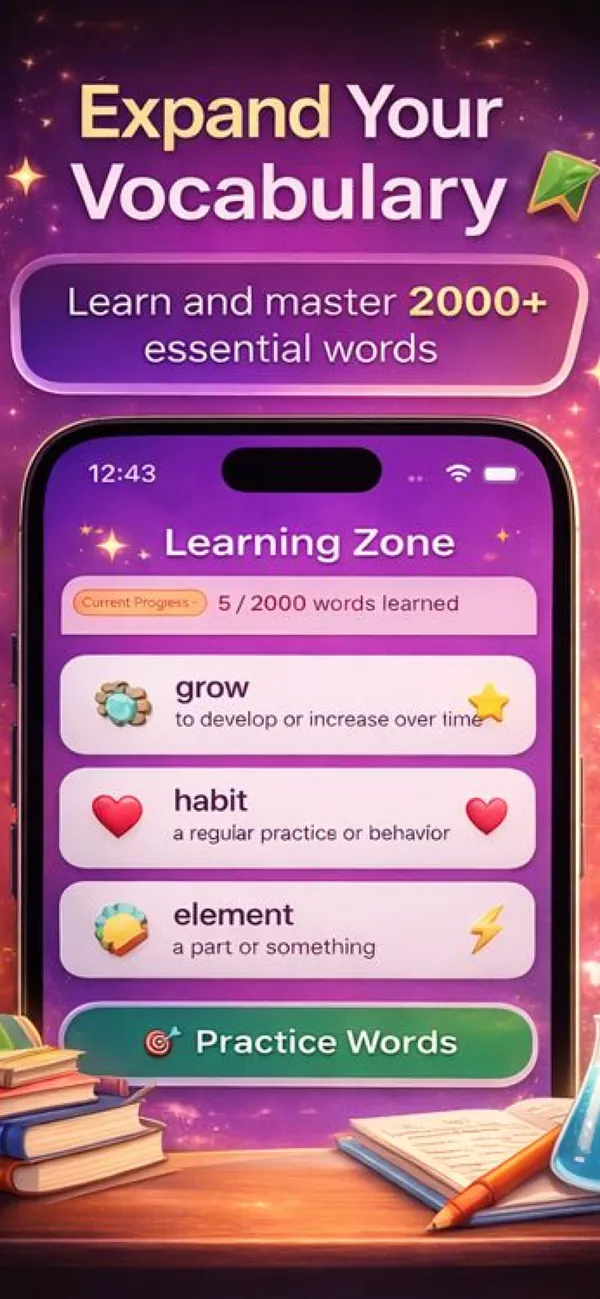
Once your child has a word-hunt notebook, our apps are a quick way to practise words on a phone or tablet. 11+ Vocab Master has 6 practice modes and 7 fun games.
- 11+ Vocab Master, our 11+ vocabulary app: 2,500+ words for CEM-style and GL Assessment tests across 100 categories, 12,000+ vocabulary questions, 6 practice modes, 7 games and unlimited mock tests.
- 11+ Verbal Reasoning Master: 2,000+ verbal reasoning questions covering 38+ question types, with flashcards, mock tests and 5 VR games, such as Analogy Arena and Code Cracker.
- Vocab Master has progress tracking, works offline, is ad-free and has audio pronunciation. VR Master has a Hard Questions list. 11+ Vocab Master is Educational App Store Certified.
Both apps come with a 7-day free trial. After that, 11+ Vocab Master is £3.99 a month, £9.99 for 6 months or £12.99 a year, and 11+ Verbal Reasoning Master is £3.99 a month, £9.99 for 6 months or £14.99 a year.
11+ Vocab Master
11+ Verbal Reasoning Master
Year 3 reading list FAQs
What books should a Year 3 child read?
A wide mix is best: funny stories, magic and adventure, a few classics, comics, non-fiction and poetry. Let your child choose most books for enjoyment, and read one harder book aloud together. Our list has 45 books for 7- and 8-year-olds, each checked on BookTrust’s Bookfinder.
Does reading in Year 3 help with the 11+?
Yes, gently. 11+ English and verbal reasoning tests depend on a good vocabulary, and reading widely is one of the easiest ways to build it. Year 3 is too early for formal 11+ practice, so focus on reading for pleasure and talking about new words.
Are comics and graphic novels good for Year 3 children?
Yes. Comics and graphic novels still contain plenty of words, and the pictures help children work out new ones. They are a good way into reading for children who find long blocks of text hard. Mix them with stories, non-fiction and poetry for variety.
Should I still read aloud to my Year 3 child?
Yes. Reading aloud lets your child enjoy books that are harder than they can read alone, such as the stretch books on our list. Stop now and then to talk about an interesting word, then let your child guess its meaning from the story.
How can my child learn new words from books?
Try a word hunt: note three new words per chapter, guess the meaning, check it in a children’s dictionary and use it in a sentence. Keep the words in a notebook and revisit them with a quick game at the weekend.
Sources and further reading
Checked on 14 October 2026. Every title and author was checked on its BookTrust Bookfinder page. Vocabulary notes are our own.
- Great Books Guide 2026–27: 6 to 7-year-olds, BookTrust
- Great Books Guide 2026–27: for 8 to 9-year-olds, BookTrust
- Bookfinder (classic titles and reading ages), BookTrust
- National curriculum in England: English programmes of study, Department for Education