Year 3 11 plus preparation isn't about the exam at all: it's about enjoying books, playing with words and getting comfortable with times tables. In areas such as Buckinghamshire and Medway the 11+ is sat early in Year 6, so a child in Year 3 now has about three years to go. That time is best spent building a love of reading and a curious attitude to new words.
This guide explains what gentle preparation looks like in Year 3, light word games to try, the first words from the national curriculum's Year 3 and 4 list, and what Year 3 maths covers. Curriculum facts come from Department for Education pages we checked on 8 October 2026.
Sources: national curriculum in England, English and mathematics programmes of study; Buckinghamshire Council (checked 8 October 2026).
If your child is in Year 3, the best 11+ preparation is a child who loves stories and asks "what does that word mean?". Protect that, and leave tests for much later.
Should you start 11+ preparation in Year 3?
Not formal preparation, but Year 3 is a lovely time to build foundations. Year 3 is the first year of key stage 2, and the national curriculum already asks children to explain the meaning of words in context, ask questions about what they read and draw inferences, such as how a character is feeling. Those are exactly the skills that 11+ comprehension and vocabulary questions build on later.
Worth doing in Year 3
- Reading together every day, including books above your child's own reading level
- Chatting about interesting words you meet
- Short, playful word games
- Practising the times tables they learn at school
Skip for now
- Practice papers, timed tests and mock exams
- Long homework-style sessions
- Talking about "passing" or grammar schools with your child
Year 3 11 plus preparation starts with reading for pleasure
A child who enjoys reading meets new words every day without trying. In Years 3 and 4, the national curriculum asks pupils to listen to and discuss a wide range of fiction, poetry, plays, non-fiction and reference books, and to recognise some different forms of poetry.
- Keep reading aloud. Choose books a little harder than your child reads alone, so they hear richer words in a story they can follow.
- Let them choose. Comics, joke books and fact books all count. Enjoyment comes first.
- Pause on one word. Now and then, stop on an interesting word and ask what it might mean from the sentence around it.
- Ask "why" questions. "Why do you think he did that?" builds the inference skills the curriculum expects.
- Visit the library. It's free, and choosing their own books keeps children keen.
Light word games for Year 3
A few minutes of word play a couple of times a week is plenty in Year 3. Here is an easy pattern to follow:
- Word of the day
Pick one interesting word from a book or a conversation. Say it, explain it and use it a few times that day.
- Same or opposite?
Take turns to say a word; the other person gives a word that means the same, or the opposite.
- Story challenge
Your child makes up a sentence or a short silly story using two of the week's new words.
For ideas, pick a few easier words from our free 11 plus vocabulary list with meanings, try a round of the free 11+ vocabulary quiz together as a game, or print the 11 plus vocabulary flashcards. Much of that material is aimed at older children, so treat it as a shared activity rather than a test.
Keep a "word jar". Each time your child finds a word they like, write it on a slip of paper and add it. Pull one out at teatime and see who can remember what it means.
Start the Year 3 and 4 word list slowly
The national curriculum has a list of 100 words that pupils should learn to spell during Years 3 and 4, so there is no rush to cover it all in Year 3. These ten are good ones to start with:
- address
- answer
- arrive
- calendar
- early
- famous
- heart
- island
- library
- often
Talk about what each word means and spot it in books. A children's dictionary helps too: the Years 3 and 4 programme of study expects pupils to use dictionaries to check the meaning of words they have read.
Year 3 maths: building up the times tables
Times tables are learned step by step across Years 2, 3 and 4, and Year 3 adds the 3, 4 and 8 times tables. Practising the tables your child is learning at school, little and often, is a simple, useful way to support maths at this age.
| School year | What the curriculum expects |
|---|---|
| Year 2 | Recall and use multiplication and division facts for the 2, 5 and 10 times tables |
| Year 3 | Recall and use multiplication and division facts for the 3, 4 and 8 times tables |
| Year 4 | All times tables memorised up to and including 12 × 12. The statutory multiplication tables check follows in June |
Our Year 4 11+ preparation guide explains the multiplication tables check and what to focus on next year.
Year 3, 4, 5 and 6: where Year 3 fits
Year 3 is the gentle start; the pace picks up slowly from Year 4. This is the overall shape.
| School year | Focus | Using 11+ Vocab Master |
|---|---|---|
| Year 3 | Reading for pleasure, talking about words and light word games. No tests, no pressure. | A few minutes of the games a couple of times a week, with audio pronunciation so your child hears each word said properly. |
| Year 4 | A short, regular word habit, wide reading and confident times tables. | Short sessions through the categories, mixing the practice modes and games. |
| Year 5 | The main preparation year: daily words, reasoning and, later, timed practice. | Daily practice and mock tests, with progress tracking showing which words need another look. |
| Year 6 | Revision before the test, then rest. | Unlimited mock tests to rehearse; it works offline, so it fits into car journeys. |
When the time comes, see our Year 4 11+ guide and the Year 5 11+ preparation plan, and our guide to building 11+ vocabulary step by step.
If word games ever feel like a chore, drop them for a while and simply read together. A child who still loves books in Year 5 is in a far better place than one who is tired of practice.
How 11+ Vocab Master and 11+ Verbal Reasoning Master can help in Year 3
Our two apps fit a few minutes of practice on a phone or tablet.
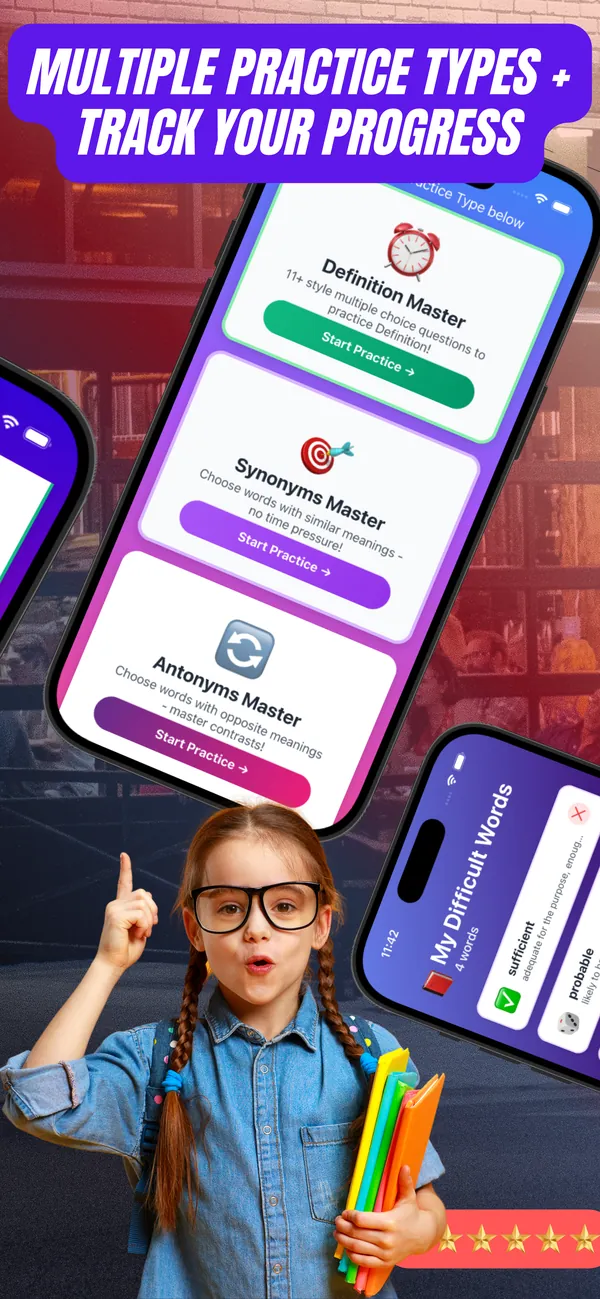
- 11+ Vocab Master, our 11+ vocabulary app: 2,500+ words for CEM-style and GL Assessment tests across 100 categories, 12,000+ vocabulary questions, 6 practice modes, 7 games and unlimited mock tests.
- 11+ Verbal Reasoning Master: 2,000+ verbal reasoning questions covering 38+ question types, with flashcards, mock tests and games.
- Vocab Master has progress tracking, works offline, is ad-free and has audio pronunciation. VR Master has a Hard Questions list. 11+ Vocab Master is Educational App Store Certified.
Both apps come with a 7-day free trial. After that, 11+ Vocab Master is £3.99 a month, £9.99 for 6 months or £12.99 a year, and 11+ Verbal Reasoning Master is £3.99 a month, £9.99 for 6 months or £14.99 a year.
11+ Vocab Master
11+ Verbal Reasoning Master
Year 3 11+ Preparation FAQs
Should I start 11+ preparation in Year 3?
Not formal preparation. In areas such as Buckinghamshire and Medway the 11+ is sat early in Year 6, so Year 3 is best spent on reading for pleasure, talking about words and light word games. Leave practice papers and timed tests until much later.
What should my Year 3 child read for the 11+?
Whatever they enjoy, plus some books read aloud that are a little harder than they read alone. The national curriculum asks Year 3 and 4 pupils to listen to and discuss a wide range of fiction, poetry, plays, non-fiction and reference books.
Which times tables does a Year 3 child learn?
The national curriculum's Year 3 programme of study covers the 3, 4 and 8 times tables, after the 2, 5 and 10 times tables in Year 2. By the end of Year 4, children should have memorised all their times tables up to 12 × 12.
Which spelling words should a Year 3 child learn?
The national curriculum has a statutory list of 100 words for Years 3 and 4, so there is no rush in Year 3. Start with simpler words from the list, such as address, answer, calendar, early and island, and talk about what they mean.
How much time should a Year 3 child spend on 11+ practice?
Very little formal practice. A few minutes of word games a couple of times a week, plus daily reading together, is plenty. If it starts to feel like a chore, stop and just read.
Sources
All checked on 8 October 2026.
- National curriculum in England: English programmes of study (key stages 1 and 2, and English Appendix 1: spelling), Department for Education
- National curriculum in England: mathematics programmes of study (key stages 1 and 2), Department for Education
- Multiplication tables check: information for parents, Standards and Testing Agency (part of the Department for Education)
- Marking the Secondary Transfer Test and Timeline for entry in 2028, Buckinghamshire Council
- Medway Test dates, Medway Council