A good Year 4 reading list mixes funny stories, mystery, fantasy, classics, real-life stories, comics, non-fiction and poetry. Here are 46 books for 8- and 9-year-olds, in eight categories, each with a short note on why it helps build vocabulary. We checked every title and author on BookTrust’s Bookfinder, and 25 of the books come from BookTrust’s Great Books Guide 2025–26 for 8 to 9-year-olds.
Year 4 is still early for formal 11+ practice, but it is a great time to read more widely and meet richer words, which 11+ English and verbal reasoning tests rely on later. In Years 3 and 4, the national curriculum asks pupils to listen to and discuss a wide range of fiction, poetry, plays, non-fiction and reference books.
Let your child choose most books for fun and share one classic aloud. Pick up three new words per chapter and talk about them: it’s a small habit that builds the vocabulary the 11+ needs.
Sources: BookTrust Bookfinder; National curriculum in England: English programmes of study (checked 15 October 2026).
How we chose this Year 4 reading list
Every book has a BookTrust interest age that includes 8 or 9. We mixed books from BookTrust’s Great Books Guide 2025–26 with well-loved classics, left out the books already on our Year 3 reading list, then grouped them by type and wrote our own vocabulary notes.
Easier
- A younger BookTrust interest age, shorter chapters or more pictures
- Good for building confidence and reading alone
Stretch
- A BookTrust reading age of 10+
- Best read aloud together, talking about new words as you go
Unmarked books sit in the middle. Every child is different, so treat the labels as a rough guide, and swap a book for another in the same category if it doesn’t grab your child.
Funny stories for Year 4
Funny books keep children reading, and jokes often depend on knowing exactly what a word means.
| Title | Author | Why it’s good for vocabulary |
|---|---|---|
| The Hundred-Mile-An-Hour Dog (easier) | Jeremy Strong, illustrated by Nick Sharratt | Short, fast and funny; collect the words used to describe Streaker the dog |
| Pia’s Pet Club: Puppy Problem | Serena Patel, illustrated by Emma McCann | A girl who calls herself an animal expert; good for pet and animal-care words |
| The Cheat Book | Ramzee | A school story about popularity; talk about words such as obsess and cheat |
| Solving Crimes is NOT My Superpower | Nathanael Lessore, illustrated by Simran Diamond Singh | A comic mystery about a stolen trophy; spot the detective words, such as thief and clue |
| Badgers Are Go! | Susannah Lloyd, illustrated by Nici Gregory | A badger on a Top Secret mission; full of playful names and spy words |
| Cruise Ship Kid: Thief at Sea | Emma Swan, illustrated by Katie Saunders | Life on a cruise ship; good for travel and job words, such as deputy cruise director |
| The Misadventures of Mina Mahmood: School Trip! | Farhana Islam, illustrated by Simran Diamond Singh | A residential trip with rock climbing, archery and kayaking; great for activity words |
| Scarlet: Defender of the Universe | James Davis, illustrated by Dotty Sutton | Funny science fiction about a girl and her annoying brother; good for space words |
Mystery and adventure for Year 4
Adventure stories move quickly, so children can work out new words from what is happening.
| Title | Author | Why it’s good for vocabulary |
|---|---|---|
| Ottoline and the Yellow Cat (easier) | Chris Riddell | A young mystery solver in the Pepperpot Building; detailed pictures support the words |
| Malamander | Thomas Taylor | A foggy seaside town called Eerie-on-Sea and a hotel ‘lost and founder’; good for seaside and mystery words |
| The Beanstalk Murder | P G Bell | A giant falls on the village of Old Stump; a fairy-tale mystery with plenty of clue words |
| The Nowhere Emporium | Ross Mackenzie | A mysterious shop arrives in Glasgow; lots of magic and wonder words |
| Cosmic | Frank Cottrell-Boyce, illustrated by Steven Lenton | A 12-year-old often mistaken for an adult; a funny space adventure |
| The Last Bear | Hannah Gold, illustrated by Levi Pinfold | An uninhabited Arctic island; good for weather and wildlife words |
| The Wild Way Home | Sophie Kirtley | A forest, a river and a strangely dressed boy; great for nature description |
Fantasy and myths for Year 4
Made-up worlds and old stories bring in describing words that children can borrow for their own writing.
| Title | Author | Why it’s good for vocabulary |
|---|---|---|
| Guardians of the New Moon: Ming and Miaow’s Great Race (easier) | Eric Huang, illustrated by Phùng Nguyên Quang | The Jade Emperor’s great race between the animals; a way into myths and the animals of the lunar years |
| How to Train Your Dragon School: Doom of the Darkwing | Cressida Cowell | Vikings and dragons, with Hiccup learning to be a hero; lots of inventive names |
| The Dragon with a Chocolate Heart | Stephanie Burgis, illustrated by Freya Hartas | A spirited young dragon and a magical ingredient; good for words about taste and smell |
| Hero Wanted! | Mark Powers, illustrated by Coralie Muce | Armour, a legendary sword and a talking horse; good for quest and knight words |
| Anya’s Quest | Jasbinder Bilan, illustrated by Jane Ray | Set among the icy slopes of the Himalayas; myth and mountain words |
| The Wild Robot | Peter Brown | A robot learning to survive on a remote island; good for words about nature and survival |
Classics to share for Year 4
Older books often use words children rarely hear in conversation, so they are ideal for reading aloud together.
| Title | Author | Why it’s good for vocabulary |
|---|---|---|
| The BFG (easier) | Roald Dahl, illustrated by Quentin Blake | Full of the BFG’s made-up words, such as human beans; great for talking about wordplay |
| Charlie and the Chocolate Factory | Roald Dahl, illustrated by Quentin Blake | Golden Tickets and an eccentric chocolatier; rich, playful description |
| James and the Giant Peach | Roald Dahl, illustrated by Quentin Blake | A giant peach and friendly giant insects; lots of unusual describing words |
| The Witches | Roald Dahl, illustrated by Quentin Blake | Spooky and funny, with words such as disguise and despise |
| The Borrowers | Mary Norton | Tiny people living in old houses; good for household words, such as harpsichord |
| The Wind in the Willows | Kenneth Grahame, illustrated by David Roberts | Mole, Ratty and the reckless Mr Toad; older language that is best shared aloud |
| The Railway Children | E Nesbit, illustrated by C E Brock | A move from London to a country cottage; a first taste of older, more formal English |
| Varjak Paw | SF Said | A Mesopotamian Blue cat, the Gentleman and his odd black cats; good for suspense words |
Everyday life and history for Year 4
Stories about real lives help children learn words for feelings, friendship and the past.
| Title | Author | Why it’s good for vocabulary |
|---|---|---|
| The Boy at the Back of the Class (stretch) | Onjali Q Raúf | Classmates befriend a refugee from Syria; good for words about empathy and kindness |
| Jakub’s Otter | Coral Rumble | A young carer who looks after an injured otter in Italy; words for worry and hope |
| The Day My School Got Famous | Jen Carney | Two boys who must share a home, and an unexploded wartime bomb under their school; good for feelings words |
| The Adventures of Rap Kid | MC Grammar | A boy who rhymes whenever he speaks; brilliant for rhyme and rhythm |
| Cobweb | Sir Michael Morpurgo, illustrated by Michael Foreman | A drover’s dog in the time of Napoleon; historical words such as drover |
| Hardit Singh Malik: World War One Flying Ace | Bali Rai | From Rawalpindi to England and the First World War; history and geography words |
Comics and graphic novels for Year 4
Pictures support the words, so children can tackle longer words with less effort.
| Title | Author | Why it’s good for vocabulary |
|---|---|---|
| Boss of the Underworld: Shirley vs the Green Menace (easier) | Tor Freeman | Five or six cartoons a page, so it’s easy to read; ask what menace means |
| Supa Nova | Chanté Timothy | A young scientist tackling plastic waste; good for science and environment words |
| Toby and the Pixies: Worst King Ever | James Turner, illustrated by Andreas Schuster | A boy crowned King of the Pixies; words such as kingdom and enchanted |
Non-fiction for Year 4
Fact books bring in subject words that stories rarely use, which is a different kind of vocabulary.
| Title | Author | Why it’s good for vocabulary |
|---|---|---|
| Become a Genius in a Year | Mike Rampton, illustrated by Gareth Williams | 365 facts, one a day; a quick daily dose of new words |
| We Are All Animals | Ben Hoare and Christopher Lloyd, illustrated by Mark Ruffle | What humans share with a cat, a bat and a jellyfish; science words such as oxygen and cells |
| Respect the Insect (easier) | Jules Howard, illustrated by Gosia Herba | Five chapters on helpful insects; nature words about soil and rivers |
| Amazing Asia | Rashmi Sirdeshpande, illustrated by Jason Lyon | Culture, history, nature and geography across Asia; lots of geography words |
| Astrophysics for Supervillains | Dr Matthew Bothwell, illustrated by Nathan Reed | Black holes, Pluto and the Moon; space-science words with plenty of jokes |
Poetry for Year 4
Poems are short, so children can notice every word, and rhythm helps new words stick.
| Title | Author | Why it’s good for vocabulary |
|---|---|---|
| Michael Rosen’s Book of Very Silly Poems (easier) | Michael Rosen | Playground rhymes and silly poems; fun to read aloud |
| Werewolf Club Rules | Joseph Coelho, illustrated by John O’Leary | Poems that turn everyday life into memorable lines; good for family and school words |
| Blue Jelly and Strawberries: Poems to Tickle Your Tastebuds | Attie Lime, illustrated by Kate Sheppard | Quirky poems with funny wordplay; good for food and taste words |
How to turn reading into 11+ vocabulary
A short word hunt after each chapter turns everyday reading into vocabulary practice. The Years 3 and 4 programme of study expects pupils to use dictionaries to check the meaning of words they have read, so this fits what your child does at school.
- Spot three new words
While reading, note three words per chapter that are new or interesting.
- Guess, then check
Guess the meaning from the sentence, then look it up together in a children’s dictionary.
- Use it in a sentence
Say or write a sentence of their own with the word, ideally about something from their day.
- Find a twin and an opposite
Think of a word with a similar meaning and one with the opposite meaning, if there is one.
- Practise little and often
Keep the words in a notebook and play a quick game with them at the weekend.
Our vocabulary games for 11 plus work well with a word-hunt notebook, and the guide to mastering 11+ vocabulary explains how to build a longer-term routine. For spelling, our page on 11+ spelling words has the statutory Years 3 and 4 list.
Once the reading habit is going well, our 11 plus vocabulary list with meanings and the free 11+ vocabulary quiz show the kind of words that come up in the 11+. In Year 4, keep them light and fun rather than treating them as homework.
Printable Year 4 reading checklist
Print this page and let your child tick off each book as they finish it. There’s no need to read them all; the aim is variety.
- The Hundred-Mile-An-Hour Dog, Jeremy Strong
- Pia’s Pet Club: Puppy Problem, Serena Patel
- The Cheat Book, Ramzee
- Solving Crimes is NOT My Superpower, Nathanael Lessore
- Badgers Are Go!, Susannah Lloyd
- Cruise Ship Kid: Thief at Sea, Emma Swan
- The Misadventures of Mina Mahmood: School Trip!, Farhana Islam
- Scarlet: Defender of the Universe, James Davis
- Ottoline and the Yellow Cat, Chris Riddell
- Malamander, Thomas Taylor
- The Beanstalk Murder, P G Bell
- The Nowhere Emporium, Ross Mackenzie
- Cosmic, Frank Cottrell-Boyce
- The Last Bear, Hannah Gold
- The Wild Way Home, Sophie Kirtley
- Guardians of the New Moon: Ming and Miaow’s Great Race, Eric Huang
- How to Train Your Dragon School: Doom of the Darkwing, Cressida Cowell
- The Dragon with a Chocolate Heart, Stephanie Burgis
- Hero Wanted!, Mark Powers
- Anya’s Quest, Jasbinder Bilan
- The Wild Robot, Peter Brown
- The BFG, Roald Dahl
- Charlie and the Chocolate Factory, Roald Dahl
- James and the Giant Peach, Roald Dahl
- The Witches, Roald Dahl
- The Borrowers, Mary Norton
- The Wind in the Willows, Kenneth Grahame
- The Railway Children, E Nesbit
- Varjak Paw, SF Said
- The Boy at the Back of the Class, Onjali Q Raúf
- Jakub’s Otter, Coral Rumble
- The Day My School Got Famous, Jen Carney
- The Adventures of Rap Kid, MC Grammar
- Cobweb, Sir Michael Morpurgo
- Hardit Singh Malik: World War One Flying Ace, Bali Rai
- Boss of the Underworld: Shirley vs the Green Menace, Tor Freeman
- Supa Nova, Chanté Timothy
- Toby and the Pixies: Worst King Ever, James Turner
- Become a Genius in a Year, Mike Rampton
- We Are All Animals, Ben Hoare and Christopher Lloyd
- Respect the Insect, Jules Howard
- Amazing Asia, Rashmi Sirdeshpande
- Astrophysics for Supervillains, Dr Matthew Bothwell
- Michael Rosen’s Book of Very Silly Poems, Michael Rosen
- Werewolf Club Rules, Joseph Coelho
- Blue Jelly and Strawberries: Poems to Tickle Your Tastebuds, Attie Lime
For the bigger picture, including times tables and spelling, see our Year 4 11 plus preparation guide.
How 11+ Vocab Master and 11+ Verbal Reasoning Master can help
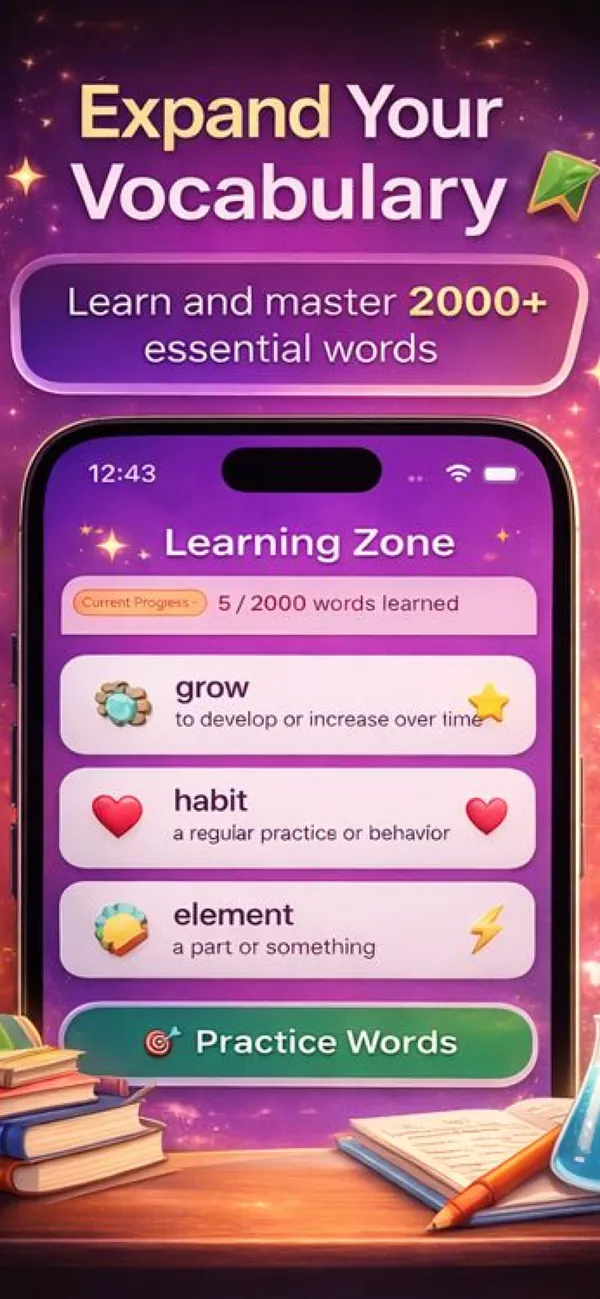
Once your child has a word-hunt notebook, our apps are a quick way to practise words on a phone or tablet.
- 11+ Vocab Master, our 11+ vocabulary app: 2,500+ words for CEM-style and GL Assessment tests across 100 categories, 12,000+ vocabulary questions, 6 practice modes, 7 games and unlimited mock tests.
- 11+ Verbal Reasoning Master: 2,000+ verbal reasoning questions covering 38+ question types, with flashcards, mock tests and 5 VR games, such as Analogy Arena and Code Cracker.
- Vocab Master has progress tracking, works offline, is ad-free and has audio pronunciation. VR Master has a Hard Questions list. 11+ Vocab Master is Educational App Store Certified.
Both apps come with a 7-day free trial. After that, 11+ Vocab Master is £3.99 a month, £9.99 for 6 months or £12.99 a year, and 11+ Verbal Reasoning Master is £3.99 a month, £9.99 for 6 months or £14.99 a year.
11+ Vocab Master
11+ Verbal Reasoning Master
Year 4 reading list FAQs
What books should a Year 4 child read?
A wide mix works best: funny stories, mystery, fantasy, a few classics, real-life stories, comics, non-fiction and poetry. Let your child choose most books for fun and share one classic aloud. Our list has 46 books for 8- and 9-year-olds, each checked on BookTrust’s Bookfinder.
Does reading in Year 4 help with the 11+?
Yes. 11+ English and verbal reasoning tests depend on a wide vocabulary, and reading widely is one of the best ways to build it. Year 4 is still early for formal practice papers, so focus on reading for pleasure and talking about new words.
Are Roald Dahl books good for Year 4?
Yes. Roald Dahl’s books are full of inventive and unusual words, such as the BFG’s made-up language, which makes them great for talking about wordplay. Our list includes The BFG, Charlie and the Chocolate Factory, James and the Giant Peach and The Witches.
Should I still read aloud to my Year 4 child?
Yes. Reading aloud lets your child enjoy books with richer language than they can manage alone, such as The Wind in the Willows or The Railway Children. Pause now and then on an interesting word and ask your child to guess its meaning.
How can my child learn new words from books?
Try a word hunt: note three new words per chapter, guess the meaning, check it in a children’s dictionary and use it in a sentence. Keep the words in a notebook and revisit them with a quick game at the weekend.
Sources and further reading
Checked on 15 October 2026. Every title and author was checked on its BookTrust Bookfinder page. Vocabulary notes are our own.
- Great Books Guide 2025–26: for 8 to 9-year-olds, BookTrust
- Great Books Guide 2026–27: for 8 to 9-year-olds (Cobweb), BookTrust
- Bookfinder (classic titles and reading ages), BookTrust
- National curriculum in England: English programmes of study, Department for Education